
Recent Comments
- Vajragoni on When the Dragon Comes Alive: A Tribute to Scott’s Visionary Presentation of the Dragon Mind of Zen
- Scott on When the Dragon Comes Alive: A Tribute to Scott’s Visionary Presentation of the Dragon Mind of Zen
- Vajragoni on Community Review: A Journey Beyond Tarot
- Scott on Community Review: A Journey Beyond Tarot
- Vajragoni on Beyond the Ten Stages: Kūkai, the Lankāvatāra, and the Unborn
-
Recent Posts
Categories
- A Darkness Visible
- A Docetic Assessment
- A Mystical Odyssey through the Sagathakam
- AI Creations
- Akṣayamatinirdeśasūtra
- Akṣhobhya’s Pure Land
- Ālaya-vijñāna
- Anūnatvāpūrṇatvanirdeśaparivarta
- Ariyapariyesanā Sutta
- Ascending the Noble Mountain of Primordial Perfection
- Asceticism
- Ashtavakra Gita in Light of the Unborn
- Audiobook
- Bankei Zen
- Beyond the Ascent
- Beyond the Rainbow Body
- Black Dragon Eye Mandala
- Bodhicitta
- Books
- Buddhadharma
- Buddhism’s Black Holes
- Buddhist Anecdotes
- Buddhist Hells
- Buddhist Meditations on the Tarot
- Chuang-Tzu
- Contemporary Musings
- Ḍākiṇī
- Dāsbodh
- Dharmakaya Abbey
- Dharmakaya Stick
- Divine Revelation
- Doctrine of the Void
- Dust Contemplation
- Ekacitta: Advanced Studies in Dark Zen
- Empowerment Without Ritual: Transmission in Unborn Mind Zen
- Entry into the Dharmadhātu
- Eremitical Dhyani Meditations
- Exploring the Book of Revelation
- Gnostikos
- Harbough and the Unborn
- Hsin Hsin Ming
- Journey to the Center of the Mind
- Karma and Rebirth
- Korean Sŏn
- Kūkai
- Kulayarāja Tantra—The Motherly Buddha
- Little Office of Our Lady of the Void
- LSD and Psychedelic Buddhism
- Māṇḍukya Kārikā
- Mañjuśrī Teaches Prajñāpāramitā
- Māra and Satan
- Meet the Buddhas
- Meister Eckhart
- Mud and Water: Bassui Zen
- Mystagogia
- Nirvana
- Notes from the Iron Stupa
- Nothingness in Nāgārjuna and John of the Cross
- Obscure Religious Cults
- Premium
- Preparation for the Afterlife
- Primordial Qigong
- Reflections on the Saṃdhinirmocana Sūtra
- Sessions with Grok
- Skillful Means and Self-Arising Display: The Unborn as the Source of All Skillful Means
- Spirituality
- Springtime with Tozen
- Subscription
- Terma: A Mind Film by Vajragoni
- The Afterglow
- The Awakening of Faith
- The Bhagavad Gita
- The Black Dragon Gate
- The Book of Bodhi
- The Cloud of Unknowing in Light of the Unborn
- The Dark Night of the Soul and Beyond
- The Diamond Sutra
- The Divine Ātman
- The Divine Liturgy of Vajrasattva
- The Doctrine of Awakening
- The Dragon Mind of Zen Tarot
- The Elucidation of Consciousness
- The Experience of No-Self
- The Great Perfection of the Unborn Mind: A Book of Privy Counseling
- The Heart Sutra
- The Hermit's Den
- The Khaggavisāṇa Sutta: A Rhinoceros Horn
- The Lankavatara Sutra
- The Lankavatarian Book of the Dead
- The Lion's Roar of Queen Śrīmālā
- The Lotus Sutra
- The Mahāparinirvāṇasūtra
- The Naga Chronicles
- The Platform Sutra
- The Ratnagotravibhāgaśāstra
- The School of the Spirit
- The Secret Golden Light of the Unborn
- The Soul
- The Śūraṃgamasamādhi Sūtra
- The Śūrańgama Sūtra
- The Sutra of Primordial Enlightenment
- The Tathāgatagarbhatārā Tantra
- The Udāna
- The Unborn and the Absolute: Unborn Mind Zen and Advaita Vedānta in Dialogue
- The Unborn Ground of Bön
- The Unborn Mind Mythos
- The Unborn Mind Sessions
- The Unborn Odyssey: A Novel
- The Vajrasamādhi Sutra
- The Vimalakirti Sutra
- The Voice of the Silence in Light of the Unborn
- The Yogasūtras of Patañjali
- The Zen Teaching of Bodhidharma
- The Zen Teaching of Instantaneous Awakening
- The Zen Teachings of Huang Po
- Theologia Mystica
- Tibetan Buddhism
- Tozen Teaching
- Tsung-mi: An Intimate Study
- Unborn I Ching
- Unborn Light Reiki
- Uncategorized
- Vasubandhu and the Absolute
- Wisdom from the Masters
- Wordsworth and Zen
- Yoga of the Manomayakāya
- Zen
- Zuowang
Archives
- November 2026
- October 2026
- September 2026
- August 2026
- July 2026
- June 2026
- May 2026
- April 2026
- March 2026
- February 2026
- January 2026
- December 2025
- November 2025
- October 2025
- September 2025
- August 2025
- July 2025
- June 2025
- May 2025
- April 2025
- March 2025
- February 2025
- October 2024
- August 2024
- February 2024
- January 2024
- December 2023
- November 2023
- October 2023
- September 2023
- August 2023
- July 2023
- June 2023
- May 2023
- April 2023
- March 2023
- February 2023
- January 2023
- December 2022
- November 2022
- October 2022
- September 2022
- August 2022
- May 2022
- April 2022
- March 2022
- February 2022
- January 2022
- December 2021
- November 2021
- October 2021
- September 2021
- August 2021
- May 2021
- April 2021
- March 2021
- February 2021
- January 2021
- December 2020
- November 2020
- October 2020
- September 2020
- August 2020
- May 2020
- April 2020
- March 2020
- February 2020
- January 2020
- December 2019
- November 2019
- October 2019
- September 2019
- August 2019
- June 2019
- February 2019
- January 2019
- December 2018
- October 2018
- August 2018
- April 2018
- March 2018
- February 2018
- January 2018
- December 2017
- November 2017
- October 2017
- September 2017
- August 2017
- May 2017
- April 2017
- March 2017
- February 2017
- January 2017
- December 2016
- November 2016
- October 2016
- September 2016
- August 2016
- July 2016
- May 2016
- April 2016
- March 2016
- February 2016
- January 2016
- December 2015
- November 2015
- October 2015
- September 2015
- August 2015
- July 2015
- June 2015
- May 2015
- April 2015
- March 2015
- February 2015
- January 2015
- December 2014
- November 2014
- October 2014
- September 2014
- August 2014
- May 2014
- April 2014
- March 2014
- February 2014
- January 2014
- December 2013
- November 2013
- October 2013
- September 2013
- August 2013
- May 2013
- April 2013
- March 2013
- February 2013
- January 2013
- December 2012
- November 2012
- October 2012
- September 2012
- August 2012
- May 2012
- April 2012
- March 2012
- February 2012
- January 2012
- December 2011
- November 2011
- October 2011
Meta
Category Archives: Premium
Beyond the Night

This work began beneath the long shadow of the Dark Night, and it is fitting that it should end by returning to the two figures who helped open that passage for us: St. John of the Cross and Father Auguste Poulain. Neither belonged to the Lankāvatārian world from which the final conclusions of this work have emerged, and neither should be made to speak a Buddhist language foreign to his own theological vision. Yet both understood something indispensable about the contemplative journey. They understood that spiritual maturation cannot finally be measured by the intensity of religious experience, and that the disappearance of familiar signs of divine intimacy may represent not failure but purification. From different directions, John and Poulain helped map the dangerous territory in which experience, interpretation, longing, discernment, and transformation meet. The Dark Night of the Soul and Beyond has entered that territory gratefully, while following it toward conclusions neither writer would have formulated in the terms employed here.
The Unborn Alone

The path has now reached its final simplicity. Every major structure through which the Bodhi-Mind has oriented itself has been examined, used, purified, and finally returned to the conditioned field to which it belongs. Recollection gathered consciousness from dispersion, Recognition turned the Bodhi-Mind toward what had never been absent, the Dark Night stripped away consolations that had been mistaken for presence, and the Night of Consciousness exposed the demand that ultimate Reality become available as evidence. The Black Dragon consumed the claimant that attempted to transform realization into possession, the ten bhūmis revealed the progressive maturation of gotra, and Dharmamegha opened that maturation into spontaneous wisdom and compassion. The imaginal display was received without metaphysical inflation, the Black Dragon Eye subjected every appearance to the Test of the Unborn, and the fruits of union brought the whole journey back into humility, compassion, equanimity, and the ordinary mind transfigured. Finally, attainment itself was relinquished, and the Bodhi-Child came home to what had never been elsewhere. What remains now is not another stage, another symbol, another insight, or another experience to be secured. What remains is the Unborn alone.
Posted in Premium, Spirituality, The Dark Night of the Soul and Beyond
Tagged Unborn Alone
Leave a comment
The Bodhi-Child Comes Home

Homecoming is one of the oldest spiritual images because it gathers longing, exile, recognition, rest, and fulfillment into a single movement. The traveler wanders, suffers, searches, learns, and eventually returns to the place from which the journey began. Yet within the present path this image must be handled with particular care, because the Bodhi-Child has never literally departed from the Ground. There has been no metaphysical exile in which the conscious being moved outside the Unborn and later crossed a distance in order to return. The wandering occurred within discriminatory consciousness, within appropriation, and within the structures through which estrangement appeared real. The homecoming of the Bodhi-Child is therefore not a journey across space but the gradual exhaustion of the conviction that one had ever truly left.
Posted in Premium, Spirituality, The Dark Night of the Soul and Beyond
Tagged Bodhi-Child, Homecoming
Leave a comment
Beyond Attainment

The path has now reached a peculiar threshold. Everything that ordinarily gives a spiritual journey its shape has already been placed under examination. Consolation was surrendered in the Dark Night, the demand for metaphysical assurance was exposed in the Night of Consciousness, and the Black Dragon consumed the claimant who attempted to convert realization into possession. The ten bhūmis revealed that Recognition must mature through the Bodhi-Mind rather than being confused with instantaneous perfection; Dharmamegha opened that maturation into spontaneous wisdom and compassion; the imaginal realm was deprived of its automatic metaphysical authority; and the Black Dragon Eye turned seeing back upon the structure of the seer. Finally, humility, compassion, equanimity, and the ordinary mind transfigured returned the whole contemplative enterprise to life as it is actually lived. Yet one assumption has accompanied nearly every stage of this journey so naturally that it can remain unnoticed even after much else has fallen away: the assumption that somewhere, somehow, there remains something to attain.
The Ordinary Mind Transfigured

Humility, compassion, and equanimity have been treated separately because each reveals a distinct dimension of maturation, yet they were never intended to become independent accomplishments collected by the contemplative along the path. Humility loosens the demand for self-establishment, compassion opens the Bodhi-Mind toward the suffering of beings, and equanimity permits that openness to remain stable amid conditions that cannot be controlled. As these fruits deepen together, something more comprehensive begins to emerge. The ordinary mind itself changes its manner of functioning. It does not cease to be conditioned consciousness, nor does it become the Unborn, but its relationship to thought, perception, emotion, action, and the phenomenal world is progressively transformed. This transformation is what we shall call the ordinary mind transfigured.
Posted in Premium, Spirituality, The Dark Night of the Soul and Beyond
Tagged ordinary mind, transfigured
Leave a comment
Equanimity

Compassion opens the Bodhi-Mind toward suffering, but openness by itself does not guarantee freedom. The more deeply one cares, the more deeply one becomes exposed to conditions that cannot be controlled. People suffer despite our efforts, relationships change despite our devotion, bodies decline despite careful attention, misunderstandings persist despite explanation, and causes set into motion long before our intervention continue to ripen according to conditions beyond our reach. If compassion is not accompanied by equanimity, the very openness that permits us to respond to suffering can become a source of exhaustion, frustration, grief, or despair. Equanimity therefore does not appear after compassion as a retreat from caring; it arises as the stability that allows compassion to remain open without demanding mastery over what it encounters.
Posted in Premium, Spirituality, The Dark Night of the Soul and Beyond
Tagged Acala, equanimity, upekṣā
Leave a comment
Compassion
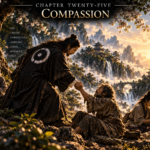
Humility prepares the ground for compassion because it loosens the structure that continually places the self at the center of experience. As long as spiritual life remains organized around what I have attained, what I understand, how I am regarded, or whether my realization is secure, the suffering of another person must compete with the claimant for attention. Humility does not destroy the person but reduces this constant gravitational pull toward self-establishment. As that burden becomes lighter, something remarkable occurs: the condition of another being can be encountered more directly. Compassion no longer needs to be manufactured as a virtue imposed upon an essentially self-enclosed consciousness. It begins to arise as the natural outward movement of wisdom.
Posted in Premium, Spirituality, The Dark Night of the Soul and Beyond
Tagged Compassion, Dharma-Cloud, Wisdom
Leave a comment
Humility

After the great images of the Dark Night, the Black Dragon, and the Eye that does not look, the path enters a quieter country. The drama of purification begins to recede, visionary phenomena have been returned to their proper place, metaphysical inflation has been exposed, and even the contemplative desire to behold the Ground has been brought before the Black Dragon Eye. What remains is not another extraordinary state waiting beyond these relinquishments. The fruits of maturation begin to appear instead within the character of the Bodhi-Mind itself, and the first of these fruits is humility. This placement is deliberate, for humility is perhaps the clearest indication that Recognition is ceasing to function as spiritual possession and is becoming embodied as a way of being.
The Eye That Does Not Look

The Black Dragon Eye Mandala brought us to a paradox that can no longer be resolved through ordinary contemplative language. We have spoken of an Eye, yet the Ground cannot become an object of sight. We have spoken of Recognition, yet Recognition cannot mean that consciousness finally succeeds in perceiving the Unborn. We have spoken of wisdom, yet wisdom cannot consist in acquiring a more refined representation of ultimate Reality. The imagery of the Eye is therefore deliberately paradoxical. It suggests seeing while denying the metaphysical structure upon which ordinary seeing depends. It points toward discernment while refusing to establish an ultimate observer standing opposite an ultimate object. The Eye does not look because there is finally nowhere outside the Ground from which such looking could occur.
The Mandala of the Ground
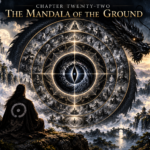
The Black Dragon Eye Mandala has appeared repeatedly throughout this work, sometimes explicitly and sometimes as the hidden architecture beneath its argument. The Dark Night stripped away the contemplative’s dependence upon consolation; the Night of Consciousness exposed the demand that ultimate Reality become available as experience; the Black Dragon consumed the claimant who attempted to possess realization; the ten bhūmis revealed the maturation of the Bodhi-Mind; Dharmamegha opened that maturation into spontaneous wisdom and compassion; and the imaginal chapters subjected visions, symbols, powers, and metaphysical claims to the Test of the Unborn. We are now prepared to approach the mandala itself, not as another visionary object to be admired or believed, but as a contemplative architecture through which the relation between the Ground, consciousness, and conditioned appearance can be seen with unusual precision.