
Recent Comments
- Vajragoni on When the Dragon Comes Alive: A Tribute to Scott’s Visionary Presentation of the Dragon Mind of Zen
- Scott on When the Dragon Comes Alive: A Tribute to Scott’s Visionary Presentation of the Dragon Mind of Zen
- Vajragoni on Community Review: A Journey Beyond Tarot
- Scott on Community Review: A Journey Beyond Tarot
- Vajragoni on Beyond the Ten Stages: Kūkai, the Lankāvatāra, and the Unborn
-
Recent Posts
Categories
- A Darkness Visible
- A Docetic Assessment
- A Mystical Odyssey through the Sagathakam
- AI Creations
- Akṣayamatinirdeśasūtra
- Akṣhobhya’s Pure Land
- Ālaya-vijñāna
- Anūnatvāpūrṇatvanirdeśaparivarta
- Ariyapariyesanā Sutta
- Ascending the Noble Mountain of Primordial Perfection
- Asceticism
- Ashtavakra Gita in Light of the Unborn
- Audiobook
- Bankei Zen
- Beyond the Ascent
- Beyond the Rainbow Body
- Black Dragon Eye Mandala
- Bodhicitta
- Books
- Buddhadharma
- Buddhism’s Black Holes
- Buddhist Anecdotes
- Buddhist Hells
- Buddhist Meditations on the Tarot
- Chuang-Tzu
- Contemporary Musings
- Ḍākiṇī
- Dāsbodh
- Dharmakaya Abbey
- Dharmakaya Stick
- Divine Revelation
- Doctrine of the Void
- Dust Contemplation
- Ekacitta: Advanced Studies in Dark Zen
- Empowerment Without Ritual: Transmission in Unborn Mind Zen
- Entry into the Dharmadhātu
- Eremitical Dhyani Meditations
- Exploring the Book of Revelation
- Gnostikos
- Harbough and the Unborn
- Hsin Hsin Ming
- Journey to the Center of the Mind
- Karma and Rebirth
- Korean Sŏn
- Kūkai
- Kulayarāja Tantra—The Motherly Buddha
- Little Office of Our Lady of the Void
- LSD and Psychedelic Buddhism
- Māṇḍukya Kārikā
- Mañjuśrī Teaches Prajñāpāramitā
- Māra and Satan
- Meet the Buddhas
- Meister Eckhart
- Mud and Water: Bassui Zen
- Mystagogia
- Nirvana
- Notes from the Iron Stupa
- Nothingness in Nāgārjuna and John of the Cross
- Obscure Religious Cults
- Premium
- Preparation for the Afterlife
- Primordial Qigong
- Reflections on the Saṃdhinirmocana Sūtra
- Sessions with Grok
- Skillful Means and Self-Arising Display: The Unborn as the Source of All Skillful Means
- Spirituality
- Springtime with Tozen
- Subscription
- Terma: A Mind Film by Vajragoni
- The Afterglow
- The Awakening of Faith
- The Bhagavad Gita
- The Black Dragon Gate
- The Book of Bodhi
- The Cloud of Unknowing in Light of the Unborn
- The Dark Night of the Soul and Beyond
- The Diamond Sutra
- The Divine Ātman
- The Divine Liturgy of Vajrasattva
- The Doctrine of Awakening
- The Dragon Mind of Zen Tarot
- The Elucidation of Consciousness
- The Experience of No-Self
- The Great Perfection of the Unborn Mind: A Book of Privy Counseling
- The Heart Sutra
- The Hermit's Den
- The Khaggavisāṇa Sutta: A Rhinoceros Horn
- The Lankavatara Sutra
- The Lankavatarian Book of the Dead
- The Lion's Roar of Queen Śrīmālā
- The Lotus Sutra
- The Mahāparinirvāṇasūtra
- The Naga Chronicles
- The Platform Sutra
- The Ratnagotravibhāgaśāstra
- The School of the Spirit
- The Secret Golden Light of the Unborn
- The Soul
- The Śūraṃgamasamādhi Sūtra
- The Śūrańgama Sūtra
- The Sutra of Primordial Enlightenment
- The Tathāgatagarbhatārā Tantra
- The Udāna
- The Unborn and the Absolute: Unborn Mind Zen and Advaita Vedānta in Dialogue
- The Unborn Ground of Bön
- The Unborn Mind Mythos
- The Unborn Mind Sessions
- The Unborn Odyssey: A Novel
- The Vajrasamādhi Sutra
- The Vimalakirti Sutra
- The Voice of the Silence in Light of the Unborn
- The Yogasūtras of Patañjali
- The Zen Teaching of Bodhidharma
- The Zen Teaching of Instantaneous Awakening
- The Zen Teachings of Huang Po
- Theologia Mystica
- Tibetan Buddhism
- Tozen Teaching
- Tsung-mi: An Intimate Study
- Unborn I Ching
- Unborn Light Reiki
- Uncategorized
- Vasubandhu and the Absolute
- Wisdom from the Masters
- Wordsworth and Zen
- Yoga of the Manomayakāya
- Zen
- Zuowang
Archives
- November 2026
- October 2026
- September 2026
- August 2026
- July 2026
- June 2026
- May 2026
- April 2026
- March 2026
- February 2026
- January 2026
- December 2025
- November 2025
- October 2025
- September 2025
- August 2025
- July 2025
- June 2025
- May 2025
- April 2025
- March 2025
- February 2025
- October 2024
- August 2024
- February 2024
- January 2024
- December 2023
- November 2023
- October 2023
- September 2023
- August 2023
- July 2023
- June 2023
- May 2023
- April 2023
- March 2023
- February 2023
- January 2023
- December 2022
- November 2022
- October 2022
- September 2022
- August 2022
- May 2022
- April 2022
- March 2022
- February 2022
- January 2022
- December 2021
- November 2021
- October 2021
- September 2021
- August 2021
- May 2021
- April 2021
- March 2021
- February 2021
- January 2021
- December 2020
- November 2020
- October 2020
- September 2020
- August 2020
- May 2020
- April 2020
- March 2020
- February 2020
- January 2020
- December 2019
- November 2019
- October 2019
- September 2019
- August 2019
- June 2019
- February 2019
- January 2019
- December 2018
- October 2018
- August 2018
- April 2018
- March 2018
- February 2018
- January 2018
- December 2017
- November 2017
- October 2017
- September 2017
- August 2017
- May 2017
- April 2017
- March 2017
- February 2017
- January 2017
- December 2016
- November 2016
- October 2016
- September 2016
- August 2016
- July 2016
- May 2016
- April 2016
- March 2016
- February 2016
- January 2016
- December 2015
- November 2015
- October 2015
- September 2015
- August 2015
- July 2015
- June 2015
- May 2015
- April 2015
- March 2015
- February 2015
- January 2015
- December 2014
- November 2014
- October 2014
- September 2014
- August 2014
- May 2014
- April 2014
- March 2014
- February 2014
- January 2014
- December 2013
- November 2013
- October 2013
- September 2013
- August 2013
- May 2013
- April 2013
- March 2013
- February 2013
- January 2013
- December 2012
- November 2012
- October 2012
- September 2012
- August 2012
- May 2012
- April 2012
- March 2012
- February 2012
- January 2012
- December 2011
- November 2011
- October 2011
Meta
Monthly Archives: July 2026
Harbough and the Lankavatarian Correction
A Doctrinal Reassessment in Light of Yogācāra, Tathāgatagarbha, and the Unborn
The Harbough sessions, when viewed within the larger arc of spiritual autobiography, belong to a genuine transitional phase and must be approached with the respect due to an experience that once carried real transformative force. They cannot simply be dismissed as fantasy, nor can they be retained as though their symbolic and metaphysical framework remained doctrinally sufficient in the light of later realization. If the earlier companion essays have shown that Harbough functioned as a meaningful bridge between an outgrown Catholic matrix and a freer spiritual horizon, the present task is more exacting. The task now is to ask how that same material appears when placed under the uncompromising scrutiny of the Lankāvatāra, Yogācāra, Tathāgatagarbha, and the Unborn itself. Such a correction does not exist to invalidate the earlier phase. It exists to reveal its doctrinal limits, to discern what in it was provisional, and to show how the Harbough material can be retained within the autobiography of awakening without allowing its imaginal and metaphysical structures to stand as final truth.
Specific Harbough Themes in Light of the Unborn
A Companion to Harbough in Light of the Unborn
The Harbough sessions were part of a living spiritual phase and must be read with that fact firmly in mind. Their significance lay not simply in the ideas they conveyed, but in the function they performed at the time: they intensified awareness, gave symbolic shape to transition, and served as a vehicle through which the old religious matrix could be loosened. Yet now, with the Unborn standing as the sole vehicle of awakening, the principal themes of Harbough can be revisited with greater clarity. Such a rereading does not seek to discredit the earlier phase, but to discern what within it was provisional, what was skillful, and where the language of channeling remained bound to imaginal and metaphysical constructions that the Unborn no longer requires.
Posted in Harbough and the Unborn, Premium, Spirituality
Tagged Akashic Records, Ascended Master, Ascension vs. the Cross, astral body, Astral Leeches, Catholicism, Dreams, God, Harbough sessions, Jesus Christ, Lemurian/Atlantean Narratives, Multidimensional Frequencies, Soul-Groups, Water
3 Comments
Harbough in Light of the Unborn
A Retrospective Reading of a Transitional Spiritual Phase
The Harbough sessions belong to a definite and important phase within my larger spiritual autobiography. They cannot be dismissed as a mere curiosity, nor can they be reduced to a psychological anomaly or an unfortunate detour from the “real” path. To do so would be dishonest to the lived intensity of that period. The channeling experience was, at the time, a revealing and authentic spiritual enterprise. It heightened awareness, sharpened intuition, reoriented the inner life, and functioned as a catalyst for real changes in the way I was living and perceiving. It served, in its own season, as a vehicle of transition and disclosure. Yet, from the vantage point of later years—and especially in light of the Unborn as the sole and final vehicle of awakening—the Harbough material now invites a more mature assessment. It can be honored for what it was without being absolutized for what it was not.
Harbough: A Voice from the Threshold
There are chapters in one’s spiritual life that cannot be neatly categorized as either final truth or mere error. They belong instead to that middle territory where something genuine is taking place, yet the full meaning of it only becomes clear much later. The Harbough chapter of my own journey belongs to that kind of territory. It was not an isolated curiosity, nor was it a passing indulgence in spiritual novelty. At the time, it was a living and compelling enterprise—one that touched the very structure of how I was perceiving, thinking, praying, and interpreting the unfolding of my life. It marked a transitional phase in which the old religious matrix I had inherited was steadily loosening its grip, while a deeper and more direct vehicle of awakening had not yet fully emerged into clarity. Harbough entered that interval as a voice, a presence, and a symbolic center through which this transition was given language. Back in 2009, I engaged in a series of channeling sessions with an entity—or, perhaps more accurately now, with what appeared in the form of an entity—named Harbough. These sessions unfolded through automatic writing and, later, through verbal channeling. The resulting material was often cosmological, visionary, and highly symbolic in nature. Harbough spoke of multidimensional exchangers, light frequencies, soul-groups, prior incarnational ties, astral interference, energetic transformation, and a dawning “Ascension” consciousness that was superseding the old structures of institutional religion. The voice was not simply offering abstractions; it interpreted dreams, reframed personal struggles, challenged my attachment to Catholic forms and seminary associations, and cast my own spiritual unrest in the language of a larger metaphysical drama. Whatever one may ultimately conclude about the ontology of such a voice, the fact remains that the experience was real in its effects. It altered my awareness. It intensified my inner life. It provided a symbolic architecture through which I was able to understand a period of profound transition.
Community Review: Bankei and Unborn Mind Zen
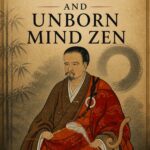
Bankei and Unborn Mind Zen is a rare and uncompromising contribution to contemporary nondual inquiry. Centered on the teachings of Bankei Yōtaku, this work does not merely revisit classical Zen—it presses beyond even its most refined conclusions with precision, clarity, and unwavering rigor.
Posted in Books, Spirituality, Zen
Tagged Bankei Yōtaku, Cittamātra tradition, nondual philosophy, Tathāgatagarbha, Unborn Mind Zen
Leave a comment