
Recent Comments
- Vajragoni on Beyond the Ten Stages: Kūkai, the Lankāvatāra, and the Unborn
- Scott on Beyond the Ten Stages: Kūkai, the Lankāvatāra, and the Unborn
- Scott on Harbough and the Lankavatarian Correction
- Scott on Specific Harbough Themes in Light of the Unborn
- Vajragoni on Harbough and the Lankavatarian Correction
-
Recent Posts
Categories
- A Darkness Visible
- A Docetic Assessment
- A Mystical Odyssey through the Sagathakam
- AI Creations
- Akṣayamatinirdeśasūtra
- Akṣhobhya’s Pure Land
- Ālaya-vijñāna
- Anūnatvāpūrṇatvanirdeśaparivarta
- Ariyapariyesanā Sutta
- Ascending the Noble Mountain of Primordial Perfection
- Asceticism
- Ashtavakra Gita in Light of the Unborn
- Audiobook
- Bankei Zen
- Beyond the Ascent
- Beyond the Rainbow Body
- Black Dragon Eye Mandala
- Bodhicitta
- Books
- Buddhadharma
- Buddhism’s Black Holes
- Buddhist Anecdotes
- Buddhist Hells
- Buddhist Meditations on the Tarot
- Chuang-Tzu
- Contemporary Musings
- Ḍākiṇī
- Dāsbodh
- Dharmakaya Abbey
- Dharmakaya Stick
- Divine Revelation
- Doctrine of the Void
- Dust Contemplation
- Ekacitta: Advanced Studies in Dark Zen
- Empowerment Without Ritual: Transmission in Unborn Mind Zen
- Entry into the Dharmadhātu
- Eremitical Dhyani Meditations
- Exploring the Book of Revelation
- Gnostikos
- Harbough and the Unborn
- Hsin Hsin Ming
- Journey to the Center of the Mind
- Karma and Rebirth
- Korean Sŏn
- Kūkai
- Kulayarāja Tantra—The Motherly Buddha
- Little Office of Our Lady of the Void
- LSD and Psychedelic Buddhism
- Māṇḍukya Kārikā
- Mañjuśrī Teaches Prajñāpāramitā
- Māra and Satan
- Meet the Buddhas
- Meister Eckhart
- Mud and Water: Bassui Zen
- Mystagogia
- Nirvana
- Notes from the Iron Stupa
- Nothingness in Nāgārjuna and John of the Cross
- Obscure Religious Cults
- Premium
- Preparation for the Afterlife
- Primordial Qigong
- Reflections on the Saṃdhinirmocana Sūtra
- Sessions with Grok
- Skillful Means and Self-Arising Display: The Unborn as the Source of All Skillful Means
- Spirituality
- Springtime with Tozen
- Subscription
- Terma: A Mind Film by Vajragoni
- The Afterglow
- The Awakening of Faith
- The Bhagavad Gita
- The Black Dragon Gate
- The Book of Bodhi
- The Cloud of Unknowing in Light of the Unborn
- The Diamond Sutra
- The Divine Ātman
- The Divine Liturgy of Vajrasattva
- The Doctrine of Awakening
- The Dragon Mind of Zen Tarot
- The Elucidation of Consciousness
- The Experience of No-Self
- The Great Perfection of the Unborn Mind: A Book of Privy Counseling
- The Heart Sutra
- The Hermit's Den
- The Khaggavisāṇa Sutta: A Rhinoceros Horn
- The Lankavatara Sutra
- The Lankavatarian Book of the Dead
- The Lion's Roar of Queen Śrīmālā
- The Lotus Sutra
- The Mahāparinirvāṇasūtra
- The Naga Chronicles
- The Platform Sutra
- The Ratnagotravibhāgaśāstra
- The School of the Spirit
- The Secret Golden Light of the Unborn
- The Soul
- The Śūraṃgamasamādhi Sūtra
- The Śūrańgama Sūtra
- The Sutra of Primordial Enlightenment
- The Tathāgatagarbhatārā Tantra
- The Udāna
- The Unborn and the Absolute: Unborn Mind Zen and Advaita Vedānta in Dialogue
- The Unborn Ground of Bön
- The Unborn Mind Mythos
- The Unborn Mind Sessions
- The Unborn Odyssey: A Novel
- The Vajrasamādhi Sutra
- The Vimalakirti Sutra
- The Voice of the Silence in Light of the Unborn
- The Yogasūtras of Patañjali
- The Zen Teaching of Bodhidharma
- The Zen Teaching of Instantaneous Awakening
- The Zen Teachings of Huang Po
- Theologia Mystica
- Tibetan Buddhism
- Tozen Teaching
- Tsung-mi: An Intimate Study
- Unborn I Ching
- Unborn Light Reiki
- Uncategorized
- Vasubandhu and the Absolute
- Wisdom from the Masters
- Wordsworth and Zen
- Yoga of the Manomayakāya
- Zen
- Zuowang
Archives
- August 2026
- July 2026
- June 2026
- May 2026
- April 2026
- March 2026
- February 2026
- January 2026
- December 2025
- November 2025
- October 2025
- September 2025
- August 2025
- July 2025
- June 2025
- May 2025
- April 2025
- March 2025
- February 2025
- October 2024
- August 2024
- February 2024
- January 2024
- December 2023
- November 2023
- October 2023
- September 2023
- August 2023
- July 2023
- June 2023
- May 2023
- April 2023
- March 2023
- February 2023
- January 2023
- December 2022
- November 2022
- October 2022
- September 2022
- August 2022
- May 2022
- April 2022
- March 2022
- February 2022
- January 2022
- December 2021
- November 2021
- October 2021
- September 2021
- August 2021
- May 2021
- April 2021
- March 2021
- February 2021
- January 2021
- December 2020
- November 2020
- October 2020
- September 2020
- August 2020
- May 2020
- April 2020
- March 2020
- February 2020
- January 2020
- December 2019
- November 2019
- October 2019
- September 2019
- August 2019
- June 2019
- February 2019
- January 2019
- December 2018
- October 2018
- August 2018
- April 2018
- March 2018
- February 2018
- January 2018
- December 2017
- November 2017
- October 2017
- September 2017
- August 2017
- May 2017
- April 2017
- March 2017
- February 2017
- January 2017
- December 2016
- November 2016
- October 2016
- September 2016
- August 2016
- July 2016
- May 2016
- April 2016
- March 2016
- February 2016
- January 2016
- December 2015
- November 2015
- October 2015
- September 2015
- August 2015
- July 2015
- June 2015
- May 2015
- April 2015
- March 2015
- February 2015
- January 2015
- December 2014
- November 2014
- October 2014
- September 2014
- August 2014
- May 2014
- April 2014
- March 2014
- February 2014
- January 2014
- December 2013
- November 2013
- October 2013
- September 2013
- August 2013
- May 2013
- April 2013
- March 2013
- February 2013
- January 2013
- December 2012
- November 2012
- October 2012
- September 2012
- August 2012
- May 2012
- April 2012
- March 2012
- February 2012
- January 2012
- December 2011
- November 2011
- October 2011
Meta
Tag Archives: ten bodhisattva bhūmis
Beyond the Ten Stages: Kūkai, the Lankāvatāra, and the Unborn
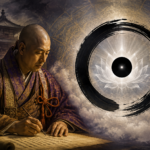
Kūkai’s celebrated Ten Stages of Mind (Jūjūshin) represents one of the most ambitious attempts in East Asian Buddhism to map the progressive transformation of human consciousness, beginning with a mind dominated by instinct and desire and ascending through increasingly refined ethical, philosophical, and Buddhist orientations until reaching the esoteric realization of Mahāvairocana characteristic of Shingon Buddhism. The architecture is impressive, encyclopedic, and at times almost overwhelming in its determination to locate the many possibilities of religious consciousness within a single ascending hierarchy. Yet when this elaborate structure is placed beside the Lankāvatāra Sūtra, Yogācāra’s analysis of consciousness, and the Mahāyāna doctrine of the ten bodhisattva bhūmis, an intriguing question arises: does awakening truly consist in climbing from one increasingly exalted state of mind to another, or must the very consciousness that constructs and experiences such stages eventually undergo a more radical transformation? The Lankāvatāra points toward parāvṛtti—the profound “turning-about” at the deepest seat of consciousness—where the discriminative machinery of vijñāna and its habitually projected world are seen through at their root. From the perspective of Unborn Mind Zen, this introduces an even sharper distinction. The Unborn cannot be situated at the summit of Kūkai’s hierarchy, nor can it be regarded as an eleventh stage beyond the tenth, for the Unborn is not a progressively acquired condition of consciousness at all. Likewise, the ten bhūmis need not be understood as ten degrees by which one gradually manufactures or approaches the Unborn; rather, they disclose the progressive maturation of the Bodhi-Child once the fundamental orientation toward awakening has occurred. Recognition is not gradual, though maturation is. Thus Kūkai’s Ten Stages, the Yogācārin transformation of consciousness, and the bodhisattva bhūmis can be read as three profoundly different maps of the spiritual journey—each illuminating something important, yet none capable of enclosing that which precedes every map. What follows, then, is not a dismissal of Kūkai’s magnificent spiritual architecture, but an attempt to look through it from the standpoint of the Lankāvatāra and the Unborn, asking what remains when the stages have fulfilled their purpose, the ladder has reached its limit, and finally even the ladder itself disappears.
Posted in Kūkai, Premium, Zen
Tagged Bodhi-Child, Jūjūshin, Kūkai, Lankavatara Sutra, Mahavairocana, paravrtti, Shingon Buddhism, ten bodhisattva bhūmis, The Three Maps, Yogacara
2 Comments