Compassion

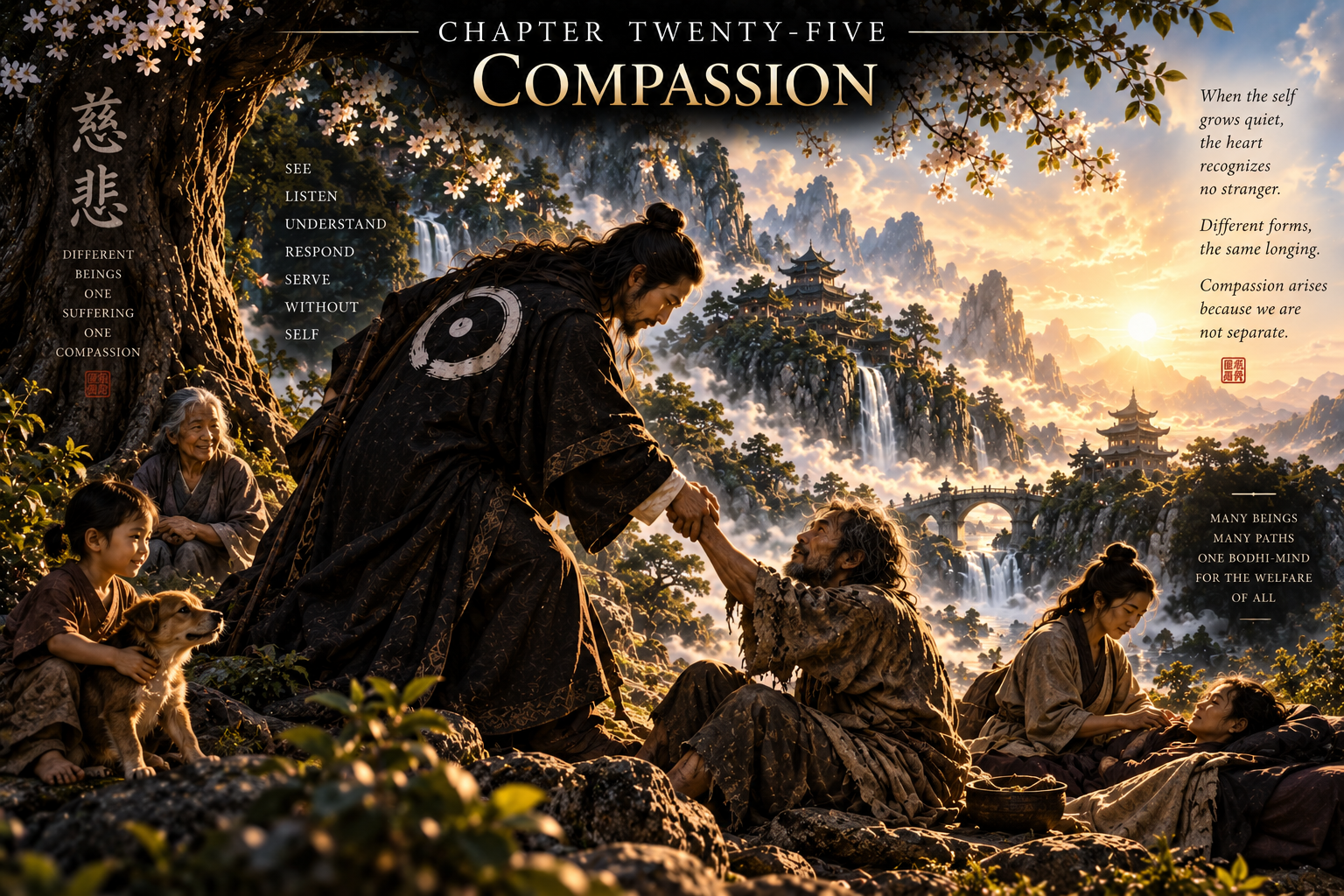
Humility prepares the ground for compassion because it loosens the structure that continually places the self at the center of experience. As long as spiritual life remains organized around what I have attained, what I understand, how I am regarded, or whether my realization is secure, the suffering of another person must compete with the claimant for attention. Humility does not destroy the person but reduces this constant gravitational pull toward self-establishment. As that burden becomes lighter, something remarkable occurs: the condition of another being can be encountered more directly. Compassion no longer needs to be manufactured as a virtue imposed upon an essentially self-enclosed consciousness.… Read More
Posted in Premium, Spirituality, The Dark Night of the Soul and Beyond | Tagged , , | Leave a comment

Humility

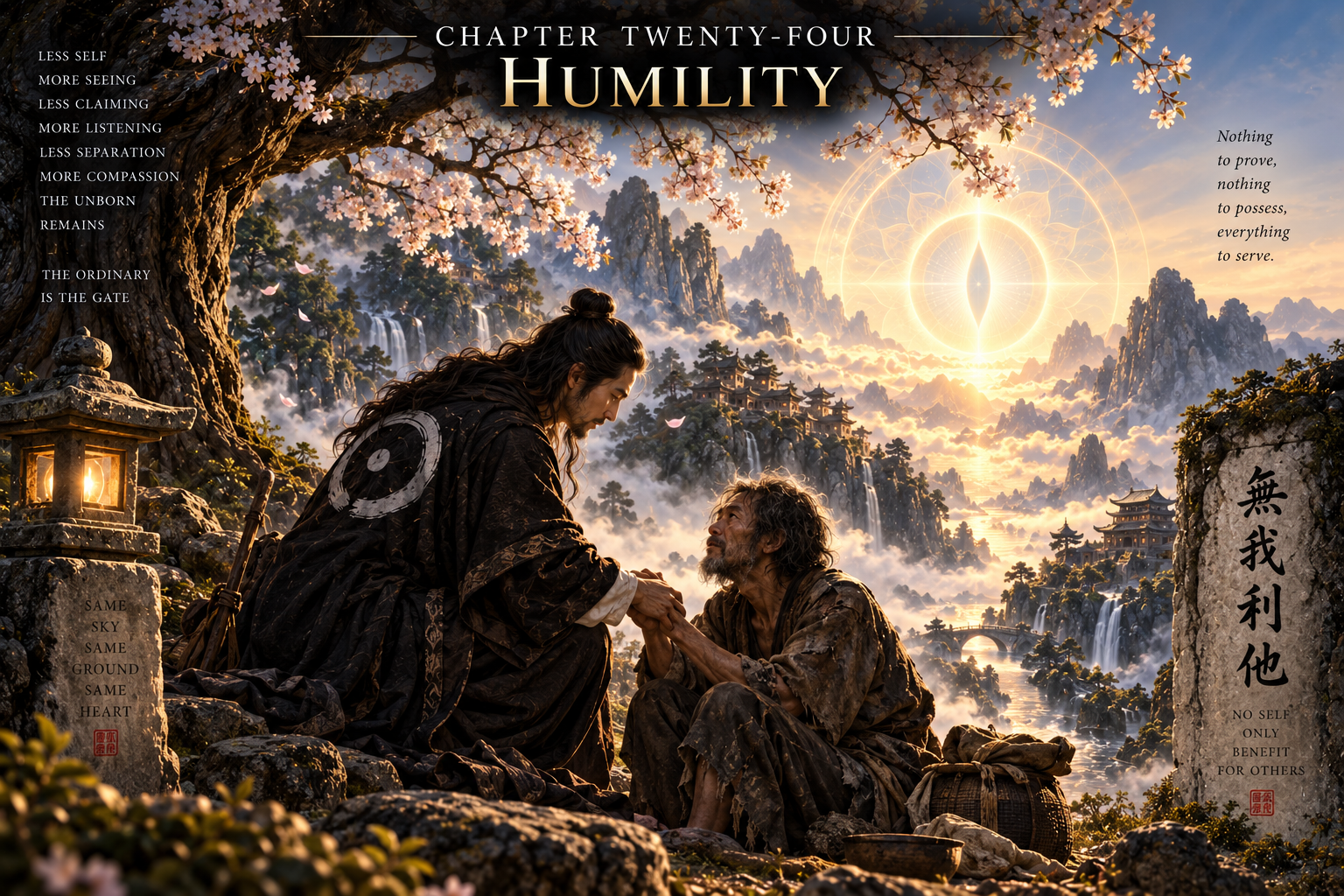
After the great images of the Dark Night, the Black Dragon, and the Eye that does not look, the path enters a quieter country. The drama of purification begins to recede, visionary phenomena have been returned to their proper place, metaphysical inflation has been exposed, and even the contemplative desire to behold the Ground has been brought before the Black Dragon Eye. What remains is not another extraordinary state waiting beyond these relinquishments. The fruits of maturation begin to appear instead within the character of the Bodhi-Mind itself, and the first of these fruits is humility. This placement is deliberate, for humility is perhaps the clearest indication that Recognition is ceasing to function as spiritual possession and is becoming embodied as a way of being.… Read More

Posted in Premium, Spirituality, The Dark Night of the Soul and Beyond | Tagged , | Leave a comment

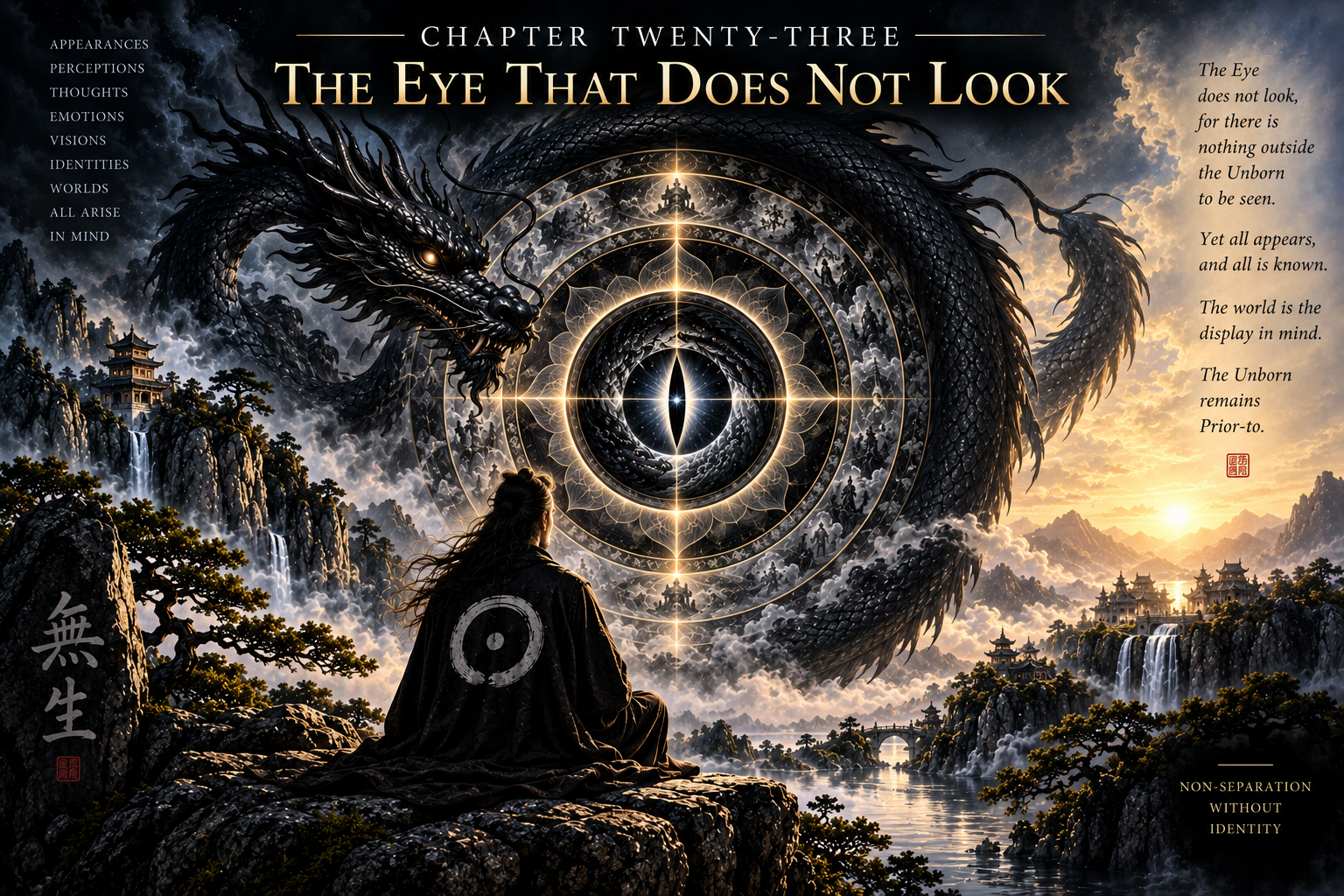
The Eye That Does Not Look

The Black Dragon Eye Mandala brought us to a paradox that can no longer be resolved through ordinary contemplative language. We have spoken of an Eye, yet the Ground cannot become an object of sight. We have spoken of Recognition, yet Recognition cannot mean that consciousness finally succeeds in perceiving the Unborn. We have spoken of wisdom, yet wisdom cannot consist in acquiring a more refined representation of ultimate Reality. The imagery of the Eye is therefore deliberately paradoxical. It suggests seeing while denying the metaphysical structure upon which ordinary seeing depends. It points toward discernment while refusing to establish an ultimate observer standing opposite an ultimate object.… Read More

Posted in Premium, Spirituality, The Dark Night of the Soul and Beyond | Tagged , | Leave a comment

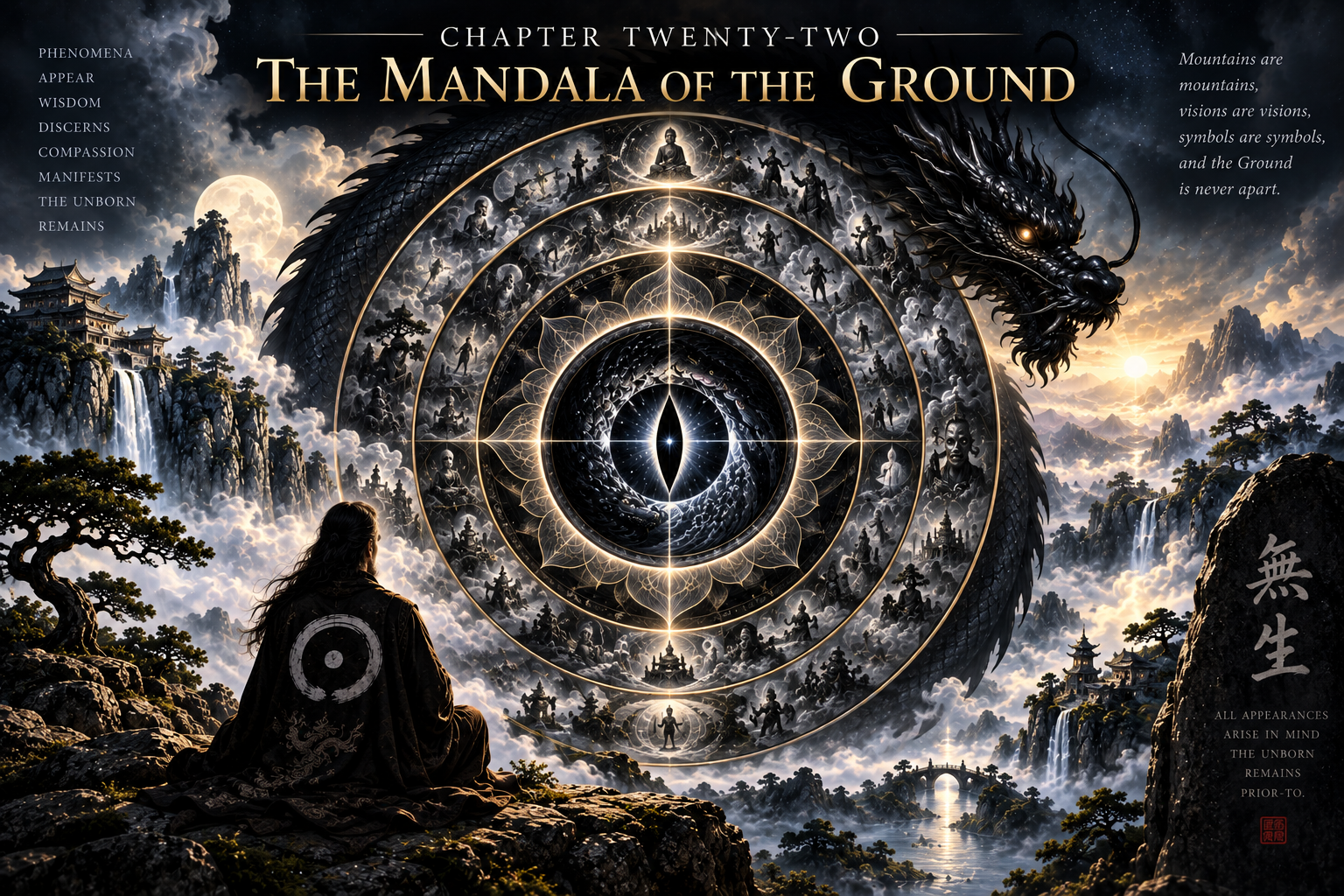
The Mandala of the Ground

The Black Dragon Eye Mandala has appeared repeatedly throughout this work, sometimes explicitly and sometimes as the hidden architecture beneath its argument. The Dark Night stripped away the contemplative’s dependence upon consolation; the Night of Consciousness exposed the demand that ultimate Reality become available as experience; the Black Dragon consumed the claimant who attempted to possess realization; the ten bhūmis revealed the maturation of the Bodhi-Mind; Dharmamegha opened that maturation into spontaneous wisdom and compassion; and the imaginal chapters subjected visions, symbols, powers, and metaphysical claims to the Test of the Unborn. We are now prepared to approach the mandala itself, not as another visionary object to be admired or believed, but as a contemplative architecture through which the relation between the Ground, consciousness, and conditioned appearance can be seen with unusual precision.… Read More

Posted in Premium, Spirituality, The Dark Night of the Soul and Beyond | Tagged , , | Leave a comment

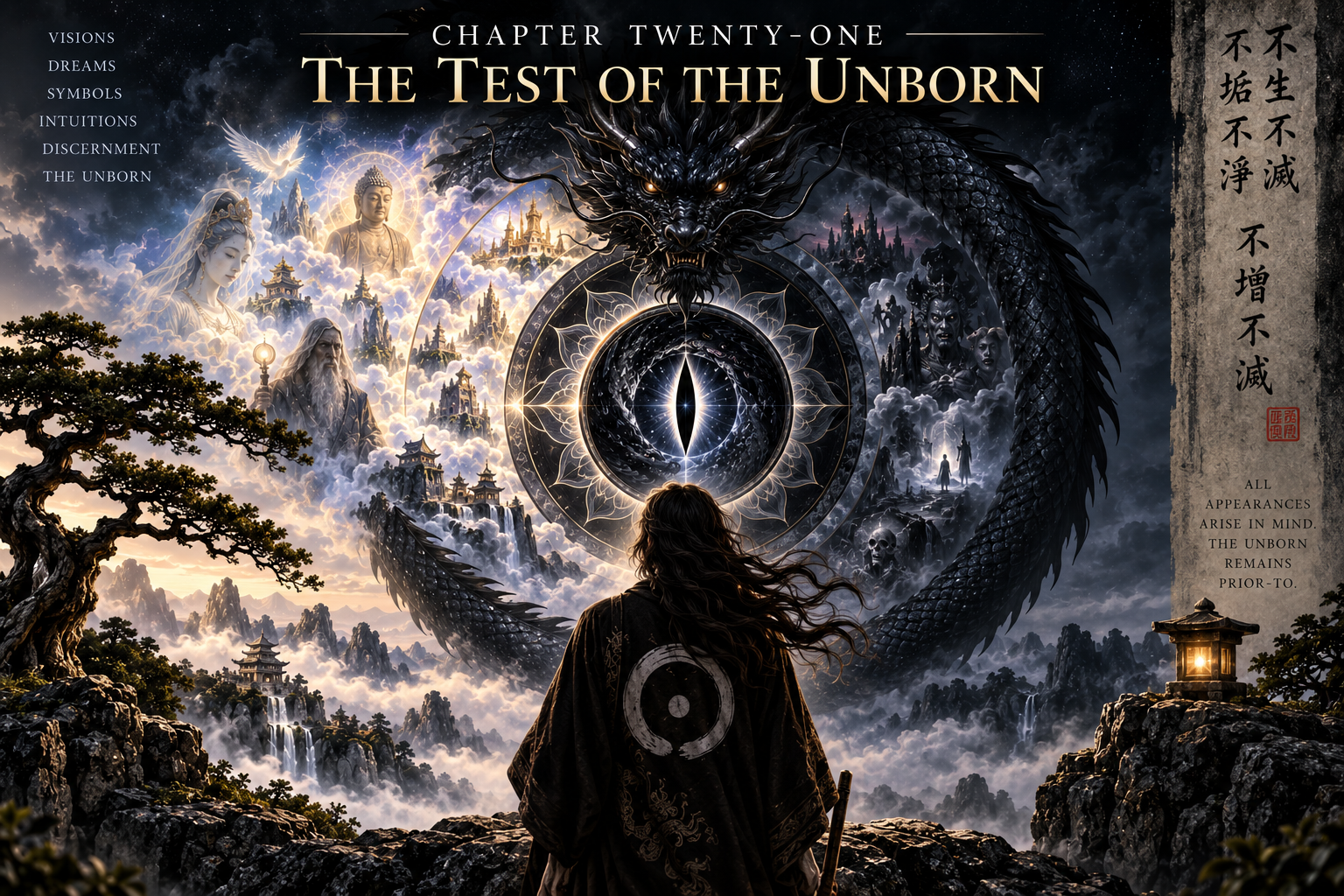
The Test of the Unborn

The preceding chapters have brought us into a region of the contemplative life where discernment becomes more important precisely because experience may become more extraordinary. Visions, dreams, symbolic encounters, interior voices, intuitions, unusual capacities, numinous presences, and apparently revelatory events can all arise within consciousness, sometimes with an intensity that seems to demand interpretation. The danger does not lie simply in their appearance. It lies in the almost irresistible tendency of discriminatory consciousness to convert appearance into authority and authority into metaphysics. Having learned to release its attachment to ordinary phenomena, consciousness may unexpectedly become more vulnerable to extraordinary ones. What it would never believe merely because it encountered a mountain or a river, it may readily believe when surrounded by luminosity, symbolic power, or an overwhelming sense of sacred presence.… Read More

Posted in Premium, Spirituality, The Dark Night of the Soul and Beyond | Tagged , , , | Leave a comment

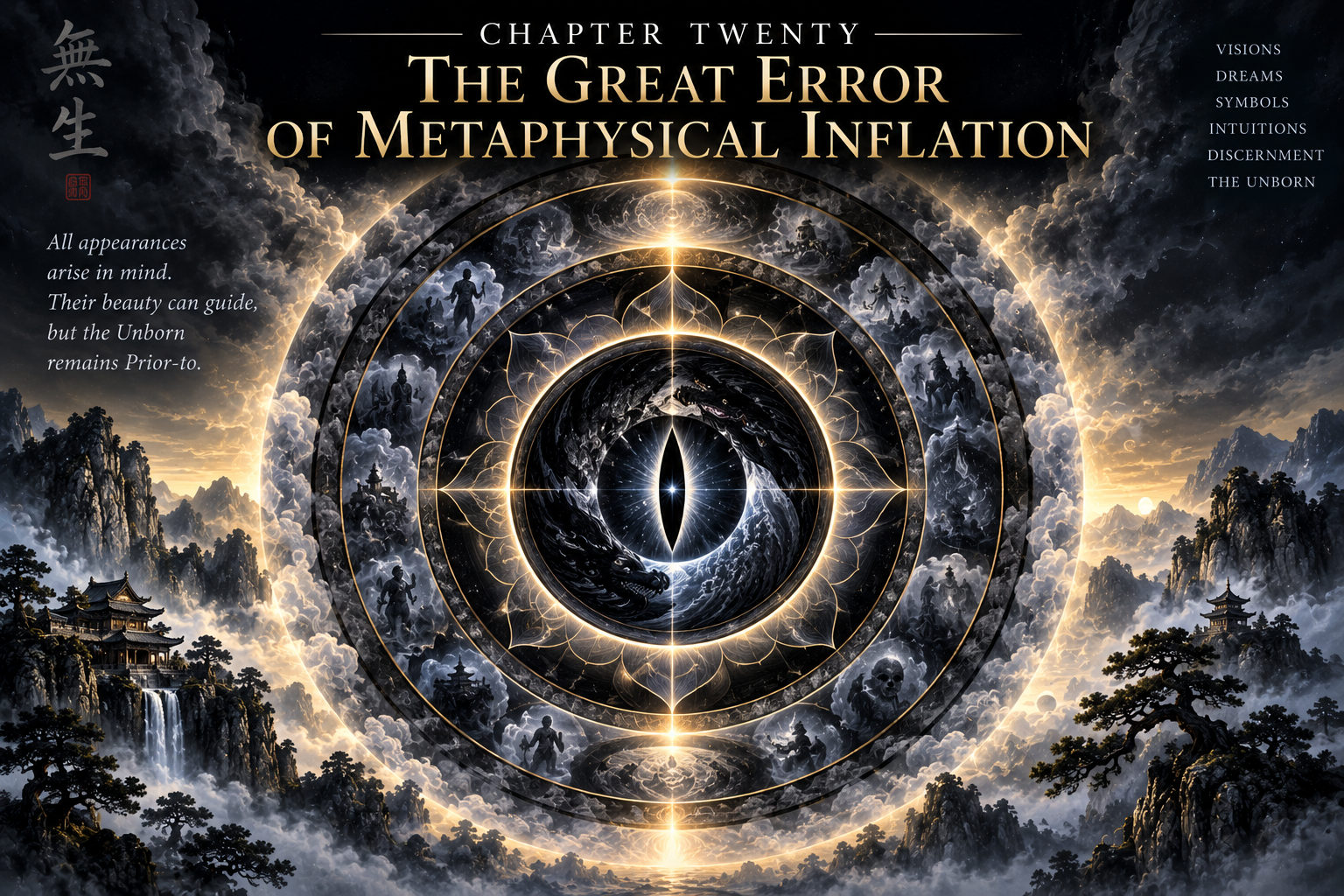
The Great Error of Metaphysical Inflation

The imaginal display becomes dangerous not when it appears, but when consciousness grants it an authority that appearance alone cannot establish. A vision may be beautiful, a dream may be penetrating, an interior voice may seem wiser than the ordinary discursive mind, and an archetypal presence may carry a numinous force unlike anything encountered in everyday experience. None of these qualities is itself evidence of delusion. The error begins when the contemplative crosses almost imperceptibly from receiving an experience to constructing an ontology around it. What appeared within consciousness becomes a revelation about the architecture of Reality, the figure appearing in the vision becomes an independently existing metaphysical intelligence, and the person receiving the experience becomes someone possessing privileged access to worlds hidden from ordinary beings.… Read More

Posted in Premium, Spirituality, The Dark Night of the Soul and Beyond | Tagged , , , | Leave a comment

The Imaginal Display

Once the contemplative has returned to the world and learned that ordinary activity need not constitute departure from Recognition, another domain requires careful examination. It is a domain that has accompanied contemplative traditions almost from their beginnings and has generated some of their most beautiful literature as well as some of their most persistent confusion. Visions arise, dreams acquire unusual intensity, interior images appear with seemingly autonomous force, symbolic figures emerge during meditation, intuitions arrive with extraordinary conviction, and voices or presences may seem to address consciousness from beyond its familiar boundaries. Such phenomena can be luminous, terrifying, instructive, consoling, archetypal, or numinous, and because they often occur during periods of spiritual transformation they can easily acquire an authority far greater than their actual significance warrants.… Read More

Posted in Premium, Spirituality, The Dark Night of the Soul and Beyond | Tagged , , , | Leave a comment

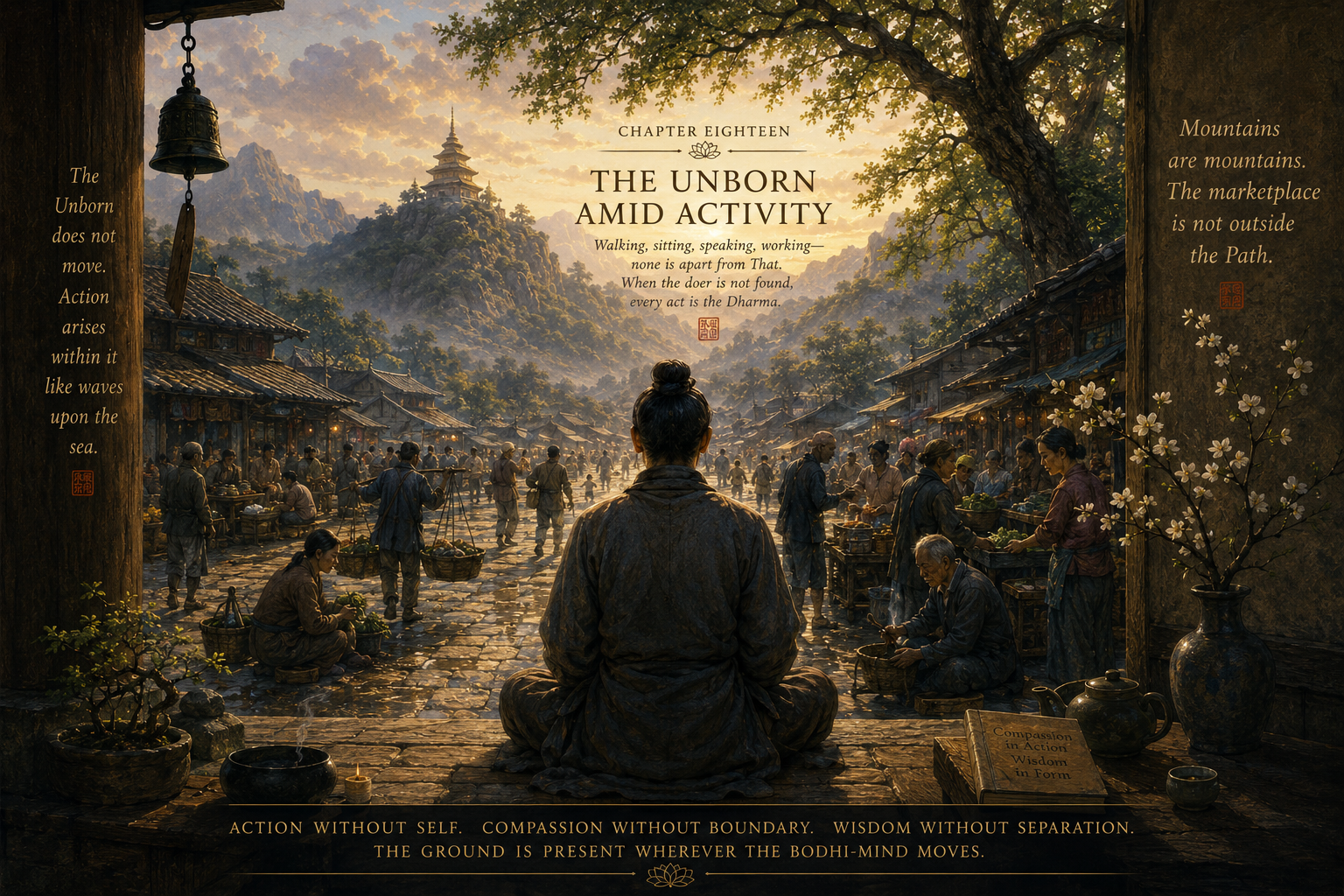
The Unborn Amid Activity

There comes a point in the contemplative path when silence is no longer the decisive test. Solitude has already revealed what it can reveal, recollection has already shown its value, Recognition has already disclosed the inadequacy of the old structures of appropriation, and the Dark Night has already stripped away many of the supports upon which spiritual consciousness depended. The Black Dragon has exposed the claimant, the bhūmis have shown that maturation continues after Recognition, Dharmamegha has revealed the spontaneous outflow of wisdom and compassion, and abiding Recognition has begun dissolving the sharp distinction between meditation and post-meditation. What now remains is the question of whether this entire maturation can survive ordinary life without rebuilding the very separations it has already seen through.… Read More

Posted in Premium, Spirituality, The Dark Night of the Soul and Beyond | Tagged , | Leave a comment

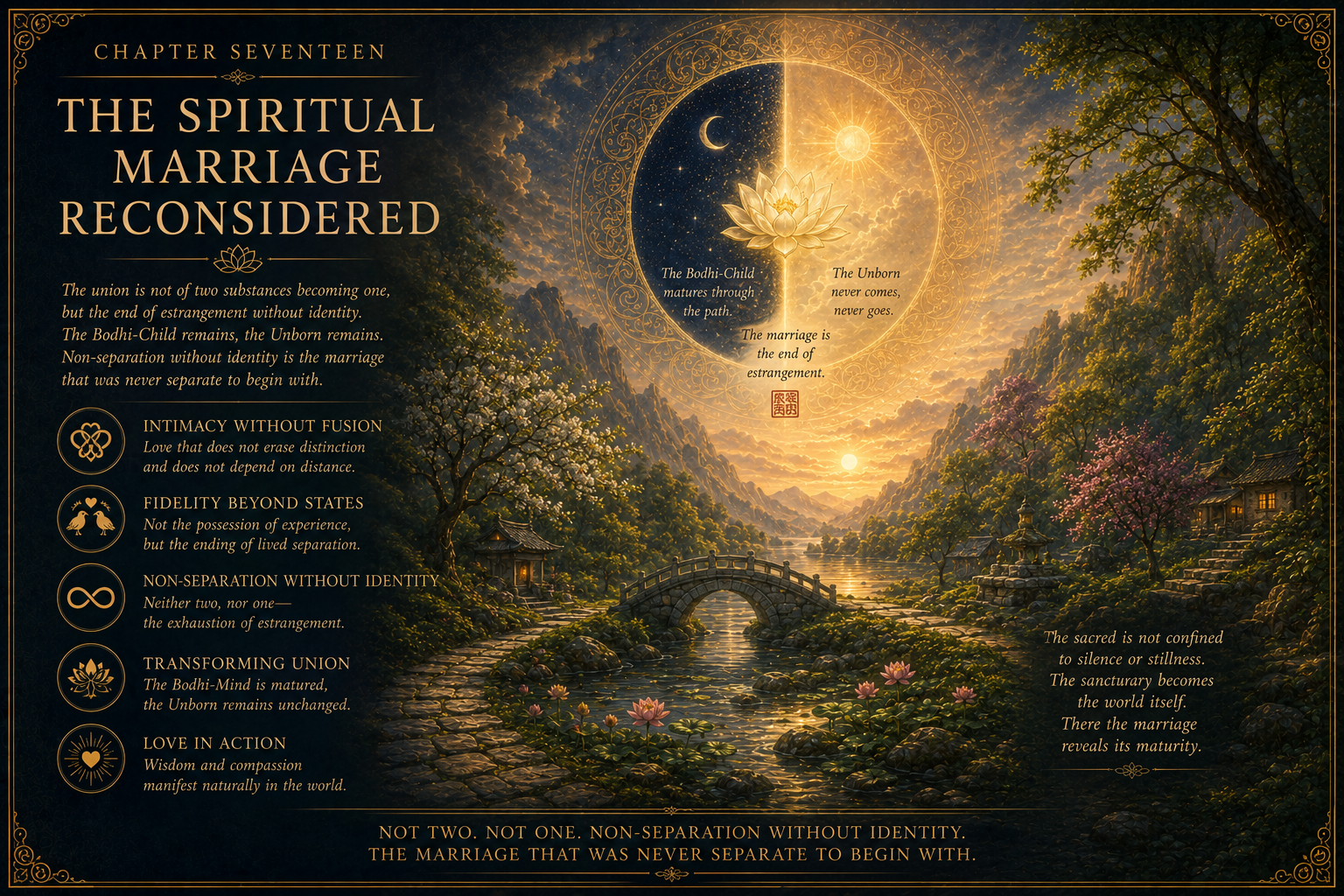
The Spiritual Marriage Reconsidered

Among the most beautiful and enduring metaphors in Christian mystical literature is that of spiritual marriage. It appears at the furthest reaches of contemplative transformation, after the soul has passed through purification, relinquished many of its former attachments, and entered a relationship with the Divine so intimate and stable that the language of ordinary devotion no longer seems sufficient. The metaphor of marriage expresses permanence, intimacy, fidelity, participation, and love. What had once been approached as distant becomes inwardly immediate, and what had once been sought through intermittent experiences of union becomes increasingly established as the governing reality of contemplative life.… Read More

Posted in Premium, Spirituality, The Dark Night of the Soul and Beyond | Tagged , | Leave a comment

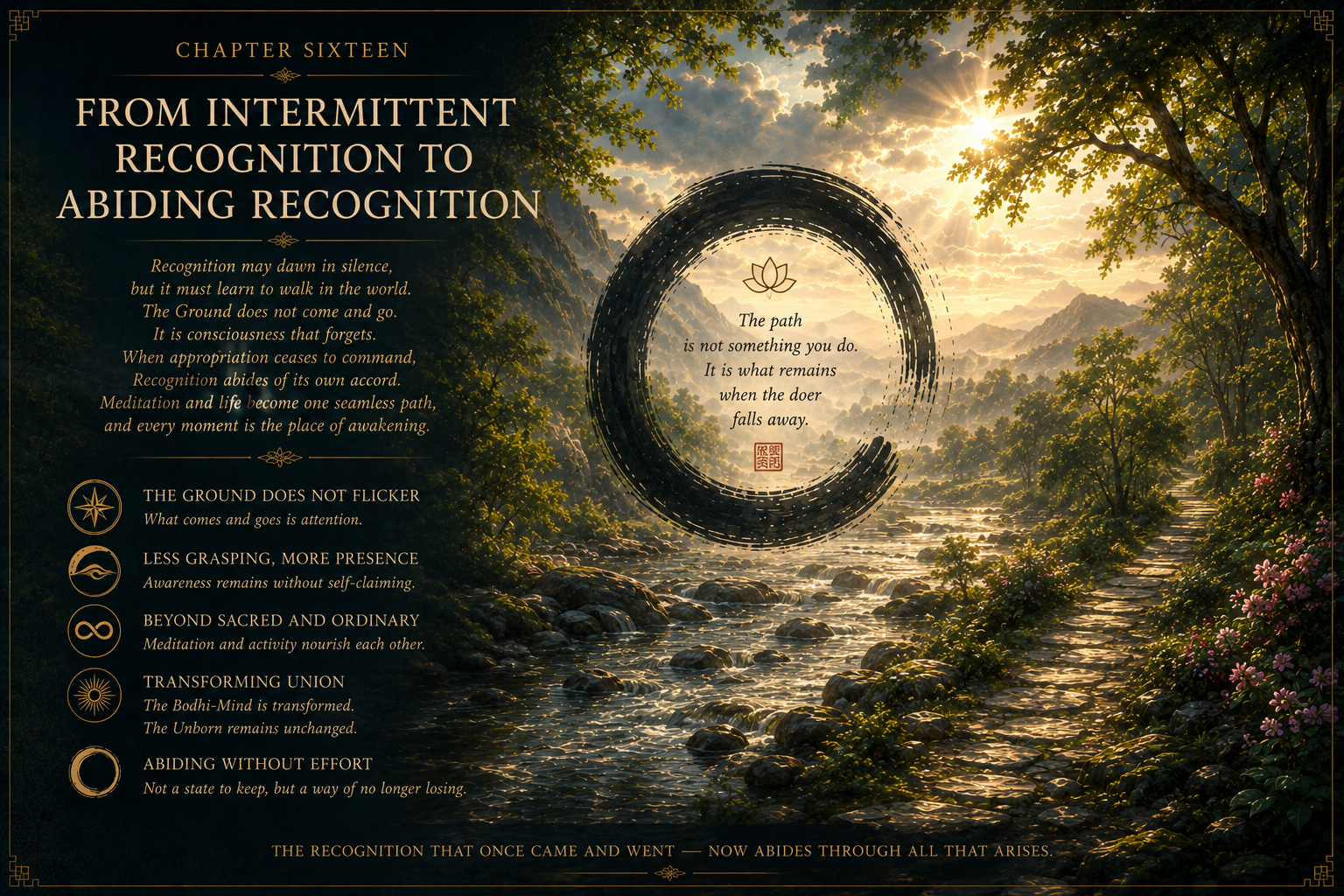
From Intermittent Recognition to Abiding Recognition

There is a profound difference between recognizing the Ground and learning to live without continually departing from what Recognition has disclosed. The first may occur with startling immediacy. A turning-about takes place, the habitual orientation of consciousness is interrupted, and what had previously been sought as though it were elsewhere is recognized as never having been absent. Such a moment can permanently alter the contemplative’s understanding of the path. Yet even authentic Recognition does not necessarily remain equally vivid or operative under every circumstance. The habits of consciousness possess tremendous momentum, and the old movements of appropriation can return long after their underlying assumptions have been seen.… Read More

Posted in Premium, Spirituality, The Dark Night of the Soul and Beyond | Tagged , , , | Leave a comment